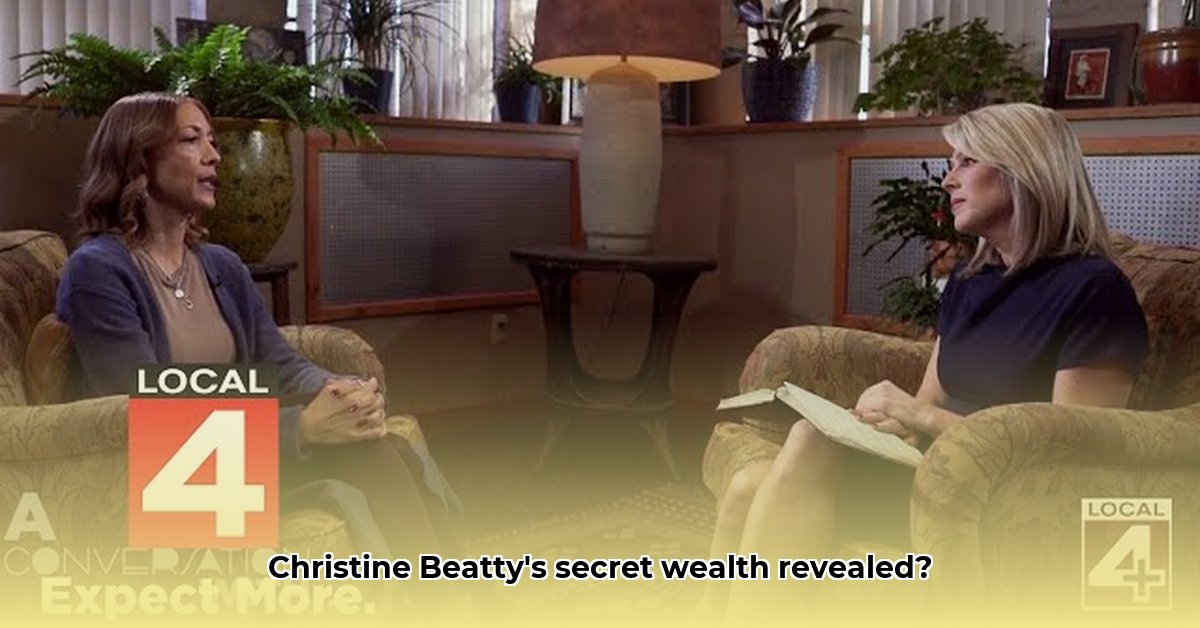
Fifteen years after the Kwame Kilpatrick scandal rocked Detroit, determining Christine Beatty's net worth remains surprisingly elusive. This isn't a simple matter of calculating assets; it's a complex narrative interwoven with power, betrayal, legal battles, and the ongoing struggle to address the scandal's financial fallout. This article explores Beatty's career trajectory, the scandal's aftermath, and the lingering questions surrounding her financial accountability, highlighting why a precise net worth remains undetermined.
From City Hall to Prison: Beatty's Career and the Scandal's Unfolding
Christine Beatty's rise within Detroit's city government was meteoric. She served as a key figure in Mayor Kwame Kilpatrick's administration, holding the influential position of chief of staff. This role undoubtedly conferred a substantial salary and benefits, the specifics of which are now obscured by the scandal that engulfed her. Her close proximity to power, however, ultimately proved her undoing.
The affair between Beatty and Kilpatrick, initially concealed, became public knowledge, triggering a wide-ranging investigation that unearthed a web of lies and abuses of power. This revelation not only shattered Beatty's public image but also had significant financial repercussions for the city of Detroit. The subsequent legal proceedings resulted in a perjury conviction, imprisonment, and a significant restitution order—an obligation that continues to shape the narrative.
Legal Consequences and Unpaid Restitution
Beatty's perjury conviction led to a prison sentence, a substantial blow to her personal and professional life. More significantly, the court mandated substantial restitution payments to the city of Detroit to compensate for losses incurred due to the scandal. However, this restitution remains largely unpaid, a fact that complicates any attempt to determine her current net worth.
Public records reveal a considerable disparity between the amount owed and the amount paid, raising questions regarding Beatty's financial capabilities and the enforcement of the restitution order. Further complicating matters, Beatty filed for bankruptcy, offering a glimpse into her post-prison financial struggles, and potentially impacting the collection of the restitution debt. The bankruptcy filings, while offering a snapshot of her finances, present an incomplete picture, leaving the precise extent of her assets and liabilities uncertain.
Attempts at Rehabilitation and Public Perception
Following her release from prison, Beatty sought to reintegrate into society, taking a position at The Heat and Warmth Fund (THAW), a Detroit-based non-profit. This move could be interpreted as an attempt at rehabilitation and community service, demonstrating remorse and a desire to contribute positively.
However, the shadow of the scandal and the unresolved restitution issue remain prominent elements of her public image. The perception of her efforts and their effectiveness are subjective, with some viewing her actions as a sincere attempt at atonement, while others remain critical, citing the outstanding debt as evidence of incomplete accountability. This ongoing debate highlights the complex challenges of navigating a path to redemption after a significant public transgression.
Lingering Questions and the Scandal's Enduring Impact
Determining Christine Beatty's net worth proves exceptionally challenging due to the unresolved restitution payments and the lack of complete transparency surrounding her post-prison finances. The unpaid debt serves as a powerful symbol of the scandal's enduring consequences, raising questions about the effectiveness of legal mechanisms designed to hold public officials accountable and recover funds lost due to corruption.
Beyond the financial aspects, the scandal's impact extended far beyond Beatty herself, significantly eroding public trust in Detroit's government and leaving a lasting mark on the city's political landscape. The case serves as a critical examination of political accountability, the challenges of financial restitution, and the enduring complexities surrounding redemption in the public eye.
Conclusion: A Story Beyond a Single Number
The absence of a definitive net worth figure for Christine Beatty underscores a larger truth: her story transcends a simple financial calculation. It highlights the long-term repercussions of public corruption, the complexities of legal accountability, and the ongoing debate surrounding rehabilitation and restorative justice. The lingering question of her unpaid restitution remains a potent symbol of this complex narrative, leaving a lasting legacy far beyond any numerical assessment of her wealth. It is a story that demands continued scrutiny and further investigation into the effectiveness of systems designed to ensure accountability and transparency in government.